
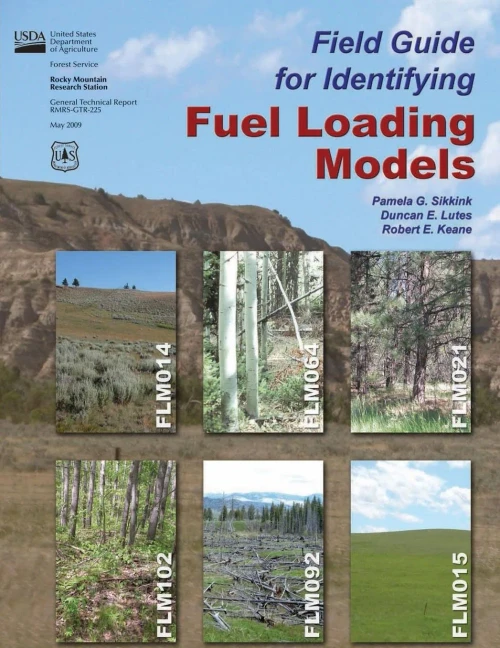

Field Guide for Identifying Fuel Loading Models
Createspace Independent Publishing Platform
Paperback or Softback 38 pages Jan 02, 2015
(No reviews yet)
Write a Review
Write a Review
Createspace Independent Publishing Platform
Field Guide for Identifying Fuel Loading Models
Millions of titlesEvery book you're looking for
Carbon-neutral shippingFree on orders over $39.99
Fast shipping worldwideDelivered to your door
Historically, fuel classifications used to estimate fire effects have been based on the vegetative characteristics of a particular site or location (Reinhardt and others 1997; Sandberg and others 2001). Vegetation-based classifications generally use cover type, structural stage, and/or habitat type (Mueller-Dombois 1964; Pfister and Arno 1980) as surrogates for describing the type and quantity of fuels on the ground and in the forest canopy (Hawkes and others 1995; Keane and others 2006; Mark and others 1995; Shasby and others 1981). The rationale for using vegetation characteristics to classify fuels is that fuels are ultimately derived from vegetation, so knowing how much fuel a particular vegetation type produces should provide an acceptable estimate of fuel load on the ground.
- Author:
- United States Department of Agriculture
- Publisher:
- Createspace Independent Publishing Platform
- Publication Date:
- Jan 02, 2015
- Number of pages:
- 38 pages
- Binding:
- Paperback or Softback
- ISBN-10:
- 1505876737
- ISBN-13:
- 9781505876734