
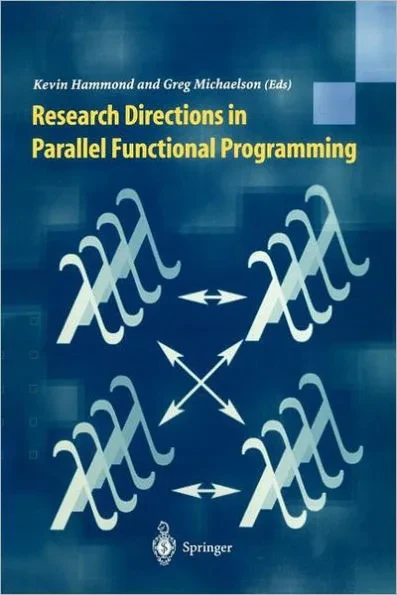

Research Directions in Parallel Functional Programming
Paperback or Softback 496 pages Nov 01, 1999
(No reviews yet)
Write a Review
Write a Review
Springer
Research Directions in Parallel Functional Programming
Millions of titlesEvery book you're looking for
Carbon-neutral shippingFree on orders over $39.99
Fast shipping worldwideDelivered to your door
Programming is hard. Building a large program is like constructing a steam locomotive through a hole the size of a postage stamp. An artefact that is the fruit of hundreds of person-years is only ever seen by anyone through a lOO-line window. In some ways it is astonishing that such large systems work at all. But parallel programming is much, much harder. There are so many more things to go wrong. Debugging is a nightmare. A bug that shows up on one run may never happen when you are looking for it - but unfailingly returns as soon as your attention moves elsewhere. A large fraction of the program's code can be made up of marshalling and coordination algorithms. The core application can easily be obscured by a maze of plumbing. Functional programming is a radical, elegant, high-level attack on the programming problem. Radical, because it dramatically eschews side-effects; elegant, because of its close connection with mathematics; high-level, be- cause you can say a lot in one line. But functional programming is definitely not (yet) mainstream. That's the trouble with radical approaches: it's hard for them to break through and become mainstream. But that doesn't make functional programming any less fun, and it has turned out to be a won- derful laboratory for rich type systems, automatic garbage collection, object models, and other stuff that has made the jump into the mainstream.
- Author:
- Kevin Hammond
- Publisher:
- Springer
- Publication Date:
- Nov 01, 1999
- Number of pages:
- 496 pages
- Binding:
- Paperback or Softback
- ISBN-10:
- 1852330929
- ISBN-13:
- 9781852330927